Make RF Tech Great Again
- Heat Wave
- Apr 7, 2025
- 3 min read

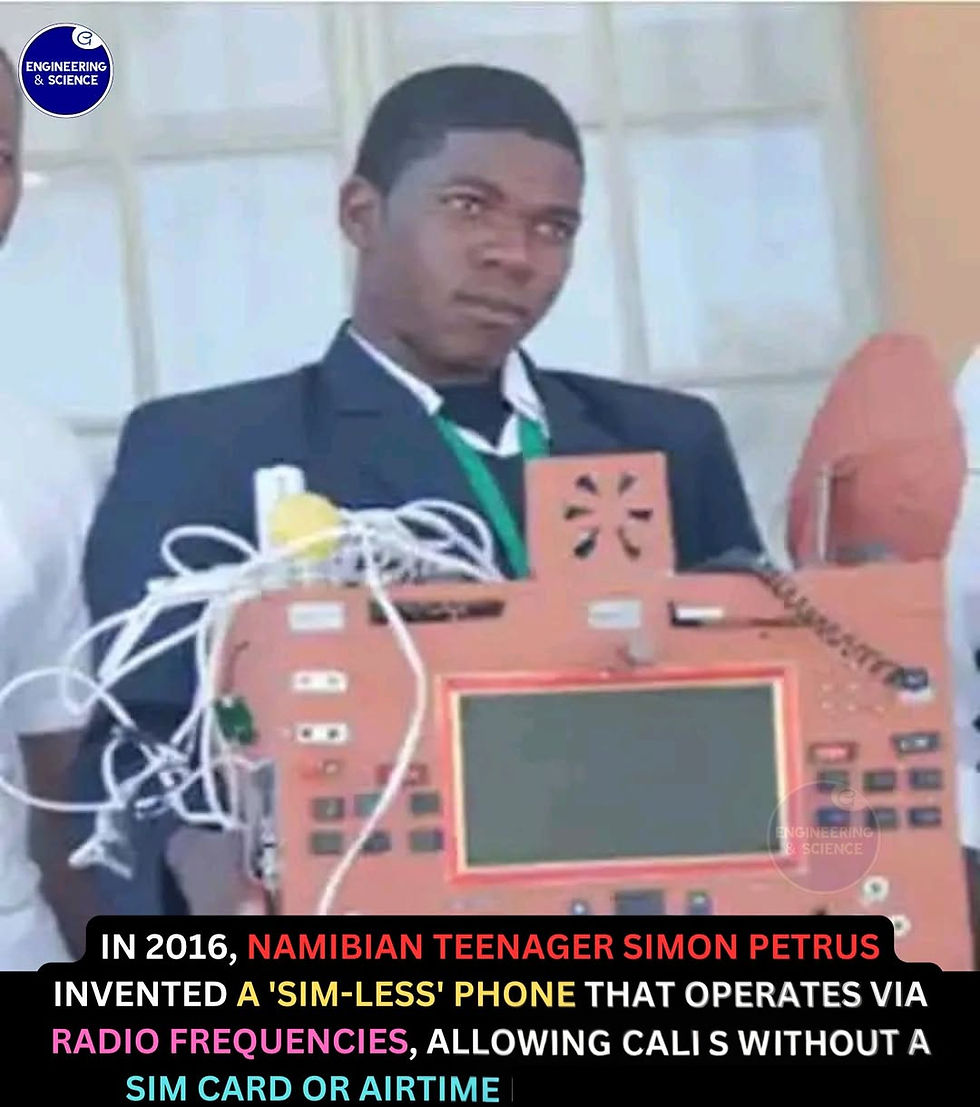
In a world perpetually tethered to SIM cards and the ever-ticking clock of airtime credit, a young innovator from Namibia dared to dream differently. Back in 2016, while still a secondary school student, Simon Petrus unveiled a creation that sent ripples of excitement through the tech world: a mobile phone that operated purely on radio frequencies, bypassing the need for SIM cards and the constant expense of airtime.
Think about that for a moment. A phone that could connect people simply by harnessing the power of radio waves, the very technology that underpins so much of our modern communication. No more scrambling for top-ups, no more being cut off mid-conversation due to depleted credit, no more reliance on the intricate infrastructure of mobile network operators. It sounded revolutionary.
Petrus's ingenuity, born from scraps of old electronics and fueled by the unwavering support of his parents, wasn't just about making calls. His device was a testament to resourceful engineering, incorporating a radio, television, light bulb, fan, and even a socket – all powered by the same RF technology that enabled free communication within range.
His achievement rightly garnered attention, winning him accolades and sparking imaginations worldwide. Here was a young mind, unburdened by the conventional limitations of the mobile industry, showing us a glimpse of a potentially different future. A future where communication could be more accessible, more equitable, and perhaps, even free from the commercial constraints we've come to accept.
But the narrative, as often happens with groundbreaking innovations, took a less glamorous turn. While the initial buzz was significant, reports from subsequent years painted a picture of challenges. Failed exams, hindering scholarship opportunities, and a perceived lack of support from his own government and telecommunication authorities seemed to stall the progress of his remarkable invention.
Fast forward to September 2023, and we hear that Simon Petrus persevered, graduating with an electronics engineering degree. Yet, the dream of his sim-less phone transforming communication remained largely unrealized, with him reportedly working on basic electronic repairs.
This brings us to the heart of the matter: Have we, as a global technological community, truly explored the potential of RF technology beyond its current applications? Simon Petrus's invention, while perhaps facing technical hurdles for widespread implementation, served as a powerful reminder of the untapped possibilities that might lie within the electromagnetic spectrum.
We've become so deeply entrenched in the SIM card model, the airtime economy, and the infrastructure built around them. But what if we truly invested in researching and developing alternative communication methods leveraging RF? Could we create more resilient, accessible, and cost-effective ways for people to connect, especially in underserved communities?
"Make RF Tech Great Again" isn't about dismissing current technologies. It's about reigniting that spark of innovation that Simon Petrus ignited. It's about looking beyond the established norms and asking:
What other applications of RF technology are waiting to be discovered in communication?
Can we develop more robust and localized communication networks based on RF principles?
How can we support and nurture young innovators like Simon Petrus who dare to challenge the status quo?
Simon Petrus's story is a potent blend of brilliance and the often-harsh realities faced by independent inventors. His sim-less phone may not have revolutionized the world yet, but it planted a seed. It reminded us that the airwaves hold potential beyond our current comprehension.
Let's not let that potential fade. Let's champion research into alternative RF communication technologies. Let's support those who are thinking outside the SIM card slot. It's time to revisit the possibilities and strive to Make RF Tech Great Again – for a more connected and equitable future.
What are your thoughts? Do you see potential in exploring RF technology for alternative communication methods? Share your ideas in the comments below!

Comments